
Future Serious Resources for March 8, 02026
Predicaments ⊗ Immature Humans ⊗ Protocols for Unraveling

Hey,
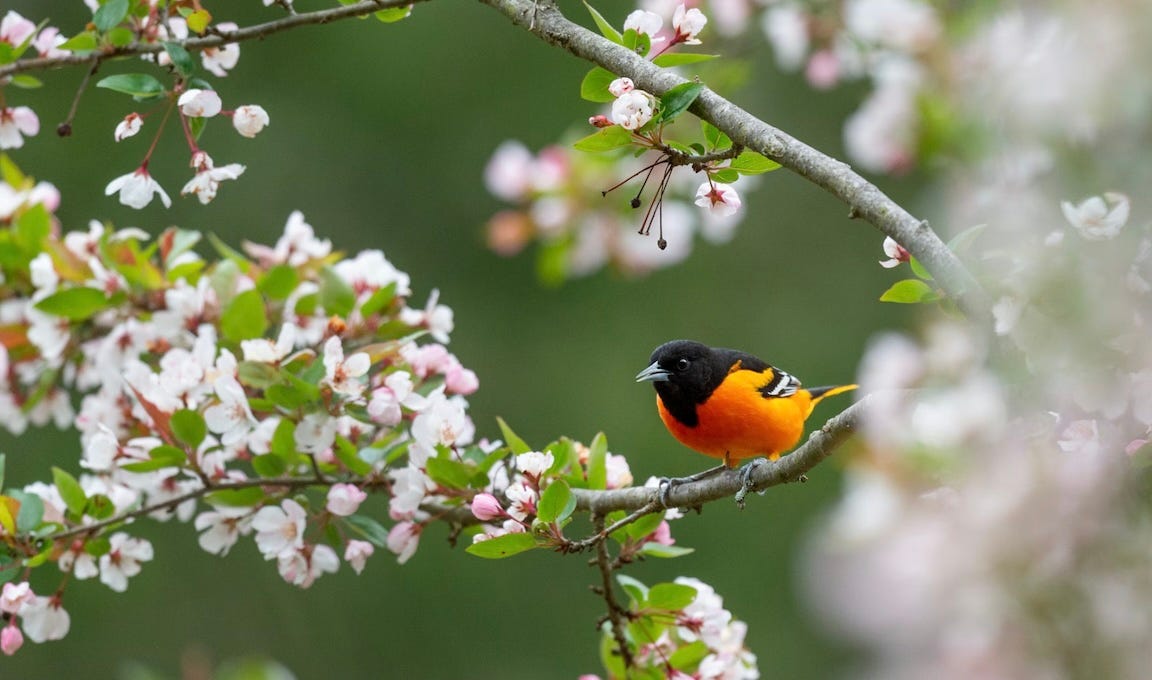
It’s been another one of those years rolled into one week. It really is too much for any one brain to pay attention to. So to start this week’s newsletter, I invite you to take a deep breath, still your mind, and sink into your body for a few minutes. Where is all of this “news” showing up in your body? I’m guessing it’s not just your brain that’s tired and tight. Make sure you’re paying attention to, and releasing to whatever extent you can, the stress of this moment in your body. It takes intention. Best done outside, where I’m hearing familiar spring sounds of doves and crows and others beginning their pairing rituals. Let in the sounds and smells and colors and warmth, or even the chill as a balm to all of the pain of this moment.
QUICK NOTE: I’ll say it again: This is a moment where we need to find the people who will support, nurture, and sustain us as we head into increasingly difficult times. If you think you might be ready to dive in with us in our next workshop over the summer, I’ve added the new dates and times and a waitlist / “get-notified” button on the website. Hope you’ll consider joining us for Cohort 5.
FINALLY: As always, thanks for reading. As a reminder, all posts here are free, but if you want to show your support for my work in general, a paid subscription is always an option. Remember: I’m donating all proceeds from paid subscriptions to my local food pantry ($264.50 so far for 2026…) at the end of the year.
With gratitude,
~Will
Once Again: Predicament, Not Problems
We humans who are paying attention have a tendency to want to “fix” what ails us. Modernity has taught us (as has school) to separate out each challenge and treat it separately. (“Problem-based learning” for the win!)
The “problem” with that approach is that while “metacrisis” we’re facing right now is showing up as many distinct issues (climate weirding, biodiversity loss, economic injustice, racism, and so many more), they are all interconnected to the fact that we are out of right relationship with one another and with all other life on the planet. We see ourselves, like we see our challenges, as separate. In fact, all of it is a tangled mess.
All of which is to say that instead of spending our time trying to find solutions to intractable problems, we should be more focused on preparing ourselves to best navigate the outcomes of the larger predicament that we are in. And few have articulated that distinction better than Erik Michaels, who is back with another must-read essay on the topic:
The reason I sat down to write this article is to explain that I’m not much into semantics. It is possible and even likely that language limits understanding and comprehension of many different topics, and especially regarding the sheer complexity of what we face as a species, it is therefore highly likely that any particular individual will have differing comprehension of these topics. But while there may be different layers of comprehension of these topics, it does not change the fact that outcomes are NOT solutions because they don’t return conditions to the beginning conditions that existed before the predicament became recognized as such. Likewise, a predicament cannot be “solved” as the previous sentence points out. No further explanation is required because physics and nature don’t negotiate.
If a person wants to attempt to bargain with these predicaments, nobody can stop him or her. Jump off a cliff and see if gravity will negotiate with you. You will come to the same “splat” at the bottom of the fall no differently than if you jump off without attempting to bargain. The exact same scenario will occur with bargaining with any of these predicaments - the outcome will be the same whether you attempt such bargaining or not. If anything, attempting to bargain with a predicament (rather than accepting it for what it is and working towards mitigation if such is possible) can only worsen the existing predicament.
I know the conclusion here is hard to hear: It’s beyond human capacity to “fix” this. We don’t know what the outcomes will be, but we’re better off focusing on building our resilience and our skills at recognizing emergence than we are “problem-solving.” Doesn’t mean we don’t make changes in the way we live on the planet. Doesn’t mean we don’t love more, don’t care more, don’t work to lessen our impact. But thinking those things are going to bring about a return to “normal” is folly. (Not that we even want that, mind you.)
An Immature Species
I’ve been trying to get my act together and write a piece that brings together a whole bunch of reading I’ve been doing of late on the subject of the relative immaturity of humans in the ways we are currently oriented to the world. I mean, our current leaders are exhibits A through at least G, right? All ego. Zero empathy. It’s embarrassing.
One of the best things I’ve read on the topic, which I’m sure I’ll fold into what I eventually write, comes from this LinkedIn post by Steffi Bednarick. It’s an announcement for a talk with author Bill Plotkin, and it was good enough to make me RSVP for the session:
At some point, the structures that once organised our lives, roles, ambitions, beliefs, and assumptions no longer hold. What once felt meaningful feels hollow, and the pathways that once seemed obvious lose their clarity.
This period of disorientation is not a malfunction but a necessary threshold in human and societal development. Crisis interrupts the familiar narratives of the ego and opens a space in which a deeper maturation can begin.
Disorientation is often catalysed by the wider realities of the world. Yet the relationship between these levels cannot be reduced to the idea that inner transformation will solve systemic problems, nor that structural change can occur without shifts in consciousness and maturity. Soul initiation calls for both simultaneously. The cultivation of psychological depth goes hand in hand with the willingness to engage with the institutional, and ecological realities of the world. Inner and outer transformation unfold together, shaping each other in an ongoing dialogue.
Leaders shaped by this journey tend to act with greater humility, wisdom and ecological awareness. Rather than positioning themselves at the centre, they understand their work as service to a larger web of life. Their authority arises not from performance or popularity, but from having encountered the deeper questions of meaning, responsibility, and belonging that the modern world often avoids.
If “disorientation” isn’t a totally apt description of what many leaders are feeling right now, especially in education, I don’t know what is. But it’s what leaders, and all of us, frankly, do in this moment that counts. Related to the first link above on predicaments, in this context, leadership is not about solving problems. It’s about helping others cultivate the “psychological depth” to confront honestly what’s in front of us and move towards a larger sense of service to all life. Arguably, this is the role of education now as well.
More to come on this later this week…I hope.
“Clearing the Field”
So, here’s your “stretch read” for the week. Meaning, take a deep breath and get good and comfy before you click the link. This one requires some focus…but it will be worth your time.
The Meta-Relationality Institute has just released a new whitepaper titled “Clearing the Field: A Relational Protocol for Navigating Systemic Unraveling Together,” and it’s a doozy. Not surprisingly, it’s the work of Vanessa Andreotti and her friends who brought us Metarelational.ai and all sorts of other goodness at the Gesturing Toward Decolonial Futures Collective. As with all of their work, this new piece is intellectual, profound, and practical at the same time.
Here’s the gist:
We offer this protocol as a pause—a deliberate interruption of familiar reflexes that often lead to polarization, simplification, and moral posturing precisely at moments when coordination across difference matters most. This pause matters because how we orient, listen, and relate shapes what kinds of coordination remain possible as conditions destabilize. When posture hardens into posturing, coordination tends to collapse into control, fragmentation, or forced alignment. When relational orientation shifts, other forms of moving together can become possible.
This protocol was written as scaffolding to help name what we are already inside of, without demanding immediate resolution or agreement. It offers a way to hold a shared field, however briefly, without turning on one another in the pursuit of being right, good, or safe in the face of systemic unraveling. In doing so, it supports forms of coordination that do not depend on consensus or shared conclusions, but on relational orientation and the capacity to remain in contact across different perspectives and exposures.
The protocol begins with a story, or more precisely, a set of three interwoven stories. Together, they provide a structure for holding complexity that is already present but often too heavy, too fast, or too disorienting to name directly. We invite you to hold these as stories rather than as settled truth. Approaching them this way supports a relational orientation that loosens the pull toward a single narrative, a single explanation, or a singular way forward.
As you get into it, you’ll see there are some self-assessment opportunities which then lead to some important reflection as to your “orientation” in this moment.
If all of this sounds a bit vague here, you’re gonna have to trust me. It’s worth the time and effort.
Thoughts / Reflections / Questions / Shorts
Life Expectancy in a Post-Industrial World - Some important reminders about our health.
Note: If you don’t know what the term “wide-boundary impacts” means, you’re about to…
The 2028 Global Intelligence Crisis - An interesting AI-motivated scenario.
”Green Flags” in Dating - Environmental values are as important as physical attraction for Gen Z.
Academics Need to Wake Up on AI - Time to move on from our denials.
As always, let me know what you’d like to see more (or less) of in these newsletters. I’m always open to learning and evolving in ways that help you make better sense of this interesting moment.
With gratitude,
~Will